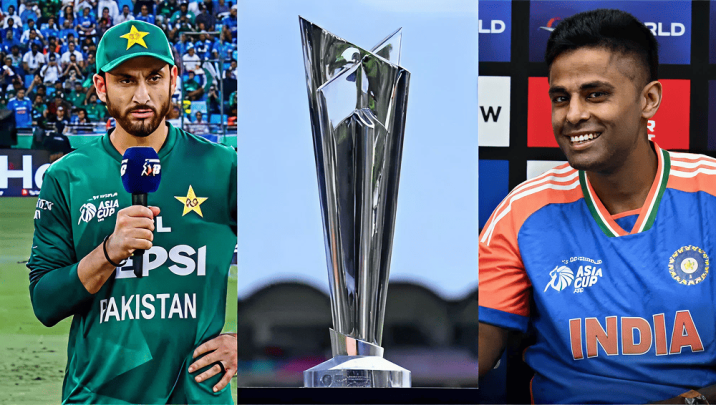
After more than a week of intense uncertainty, debate, diplomacy and high-stakes negotiations that captivated the cricketing world, Pakistan has officially withdrawn its boycott of the India match at the ICC Men’s T20 World Cup 2026 and agreed to take the field against India on February 15 in Colombo, ending a ten-day standoff that threatened to overshadow the marquee fixture of the tournament. The controversy began in early February when the Government of Pakistan announced that while the national team would participate in the World Cup, it would not play its scheduled group match against India, a decision that was widely framed as a protest in solidarity with Bangladesh after the Bangladesh Cricket Board (BCB) refused to travel to India on security grounds, prompting the ICC to replace Bangladesh with Scotland in the competition. Official statements from Islamabad, posted on the government’s X (formerly Twitter) account, made clear the unusual “selective boycott” — Pakistan would compete in all matches except the high-profile clash with India, a decision that sparked immediate global debate about politics and sport.
The initial boycott announcement sent shockwaves through the cricket community. The International Cricket Council (ICC) responded sternly, saying selective participation undermined the integrity of a global sporting event where all qualified teams are expected to play according to the fixture list, warning that such a stance was “difficult to reconcile with the fundamental premise” of the World Cup and could have lasting implications for the sport’s global ecosystem. The ICC’s critique emphasised that it respects national policy while also expecting member boards to uphold competing commitments to maintain fairness, competitiveness and consistency in international cricket. The Board of Control for Cricket in India (BCCI) publicly backed the ICC’s position, noting that warping the tournament schedule over political disagreements adversely affects fans worldwide and the sport at large.
Amid this backdrop of contention, the BCB also played a significant diplomatic role, urging Pakistan to reconsider its boycott for the good of the global game and to preserve what many described as cricket’s most watched and commercially lucrative fixture. Bangladesh’s cricket leadership, including BCB president Aminul Islam, engaged directly with Pakistan Cricket Board (PCB) chairman Mohsin Raza Naqvi in Lahore, pressing the case that Pakistan’s participation against India would ease scheduling certainty and benefit the entire cricket ecosystem, particularly given that millions of fans and billions in broadcast revenue hinge on the high-voltage clash between the two neighbouring rivals.
Behind the scenes, talks intensified involving the ICC, the PCB, and representatives of other member nations including Sri Lanka and the United Arab Emirates. These multilateral negotiations emphasised both the financial and diplomatic stakes of the dispute: broadcasters and sponsors stand to lose hundreds of millions if the India–Pakistan fixture were cancelled, as numerous industry sources highlighted the massive revenue tied to the match. Global cricket stakeholders also signalled that the loss of the game could dent confidence in the tournament’s organisation and the ICC’s ability to manage crises of political and sporting overlap.
In a dramatic turn of events on Monday evening, the Pakistan government issued a new statement announcing that it had reversed its boycott directive, saying that, “in view of the outcomes achieved, as well as at the request of friendly countries,” it had granted permission for the Pakistan national team to take the field against India on February 15 as originally scheduled. The statement emphasised that the decision was made to “protect the spirit of cricket” and to support the continuity and success of the global sport across all participating nations. This reversal came after explicit encouragement from friendly cricketing nations, and Pakistan Prime Minister Shehbaz Sharif reportedly received personal communication from Sri Lanka’s President, who urged an amicable resolution to the impasse.
Cricket officials reiterated that the ICC and PCB had engaged in productive dialogue, underscoring mutual recognition of the need to resolve the controversy in a manner that serves the best interests of the game. The ICC also confirmed that Bangladesh would not face any punishment for its earlier withdrawal from the tournament, and as part of broader discussions, Bangladesh was reportedly granted hosting rights for an additional ICC event in the 2028-2031 cycle — concessions that were widely seen as part of the diplomatic groundwork underpinning Pakistan’s decision to relent.
In Pakistan’s domestic sphere, the turnaround was interpreted amid mixed reactions. PCB chairman Naqvi had earlier publicly criticised the ICC’s decision to exclude Bangladesh as “double standards” although he avoided claiming that the boycott was about anything other than solidarity with a fellow cricketing nation. Sources close to negotiations suggested that PCB may have also raised issues related to a more equitable ICC revenue-sharing model, though neither the Pakistan government nor ICC made public reference to this in their formal statements.
The reversal brings relief not only to the ICC and cricket fans but also to broadcasters and sponsors who had been bracing for financial repercussions, potentially in the hundreds of millions of dollars, if the match was forfeited. Both Indian and Pakistani teams — already in training and preparing for the World Cup’s opening weeks — now have clarity over one of cricket’s most storied rivalries being played out on a global stage, with fans from both countries eagerly anticipating the contest.
India’s team, led by its captain, had confirmed earlier that India would travel to Colombo regardless of Pakistan’s stance, while Pakistan’s decision to participate ensures that the tournament schedule will remain intact and the group stage will proceed without the logistical and diplomatic headaches that would have accompanied a high-profile forfeit. The match, slated for February 15 in Colombo, is now officially reinstated, setting the stage for what promises to be one of the most eagerly watched games of the 2026 ICC T20 World Cup.
As the cricket world moves past the boycott drama, the broader narrative underscores how intertwined sport and geopolitics have become and how global sporting bodies like the ICC must balance integrity with diplomatic sensitivity. Pakistan’s withdrawal of its boycott call and decision to face India will be seen as a pragmatic step that safeguards both the competitive spirit of the tournament and the commercial engine of international cricket, even as debates continue over the role of politics in sport.


