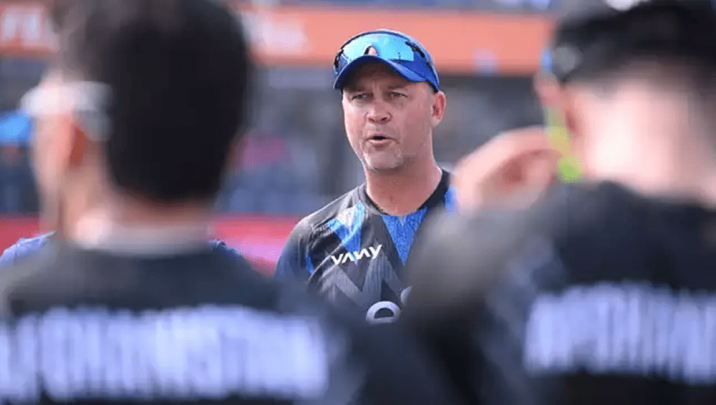
There was a brief pause before Jonathan Trott gathered his thoughts. For much of the press conference that followed Afghanistan's final group game of the 2026 T20 World Cup in Chennai on Thursday (February 19), he spoke with the composure that has largely defined his tenure as their head coach. But when asked about his journey with the team, the 44-year-old found it very hard to hold back the tears. "I said I didn't want to get upset," he admitted before going on to revisit a journey he described as both accidental and deeply fulfilling.
The decision to part ways after the end of the T20 World Cup was made months ago even though the former England batter did hint on Thursday that it wasn't his decision. Afghanistan's campaign this time didn't match up to their 2024 heroics. As a result, it ended with a comfortable win over Canada in an inconsequential fixture. Ibrahim Zadran was named player of the match for his unbeaten 95. Not only did the opener dedicate his award to Trott, he also had the best seat in the house during his coach's farewell press conference, watching him reflect on his journey.
More than the results, Trott chose to look back at the human side of a team that has evolved significantly since he took charge in 2022. "Lots of great memories," Trott said. “I always feel very fortunate enough to have had a lot of memories as a player but also now as a coach as well. Beating Pakistan for the first time in a World Cup, beating England, bilateral series wins away from home against teams like Pakistan, Bangladesh, South Africa, all these sorts of things. I've been very fortunate enough to have coached some really great players, some really good humans, a good bunch of guys.”
For Trott, the role was never part of his original plan. He was handed 'the opportunity by chance', stepping in after Graham Thorpe was originally set to take up the position. That unexpected beginning, however, soon turned into an experience of a lifetime. "Graham Thorpe was supposed to be the coach and he unfortunately couldn't take up the role," he admitted. "I then got offered the job and took it with both hands. But at the same time, Graham was huge in my development as a coach and he gave me great opportunities at the ECB and had full faith and belief in me as a coach. So I have a lot to be thankful for him for this role. So I'm here by chance. I gave it my all. I hope the players can see the love that I have for the game and the care that I have for them as players and as people."
While Afghanistan's rise in global tournaments has often been linked to their star spinners, Trott pointed to a quieter transformation - the shift from a collection of individuals to a more cohesive unit. "I remember my first trip when we were in Ireland and I just saw things that made me realise that these boys are so talented and focused," he looked back. "If you just add a little bit of structure to the mindset, professionalism and the high standards that we hold ourselves to, not individuals, it makes a big difference. I remember seeing Ibra (Ibrahim Zadran) for the first time, I remember seeing Azmat (Azmatullah Omarzai) for the first time, I remember seeing Gurbaz (Rahmanullah) for the first time and thinking, what amazing players. Let's try and build on what we've got, this natural raw talent. That first tour to where we are now is chalk and cheese."
He was quick to redirect the credit back to the players, repeatedly emphasising the context in which they operate. Afghanistan, unlike many established sides, still deal with limitations like not having a permanent home base despite their rise in international cricket. "They operate at such a high level compared to what they're afforded compared to other countries, yet they can come on this stage and compete and almost people expect us to be in the semifinals and finals, which I find amazing that they can do that, handle the pressure, but also the background, they don't have the sort of day-to-day coaching that young players have, academies and facilities and all these things and schooling,


